
What Does Bougie Mean? Trying to Keep Up With Modern Slang

Let’s talk about bougie. Not because I want to, but because apparently, I have to. One minute I’m living my life peacefully, eating Cheez-Its straight from the box like a perfectly civilized adult, and the next, someone informs me that my snack of choice is “not very bougie.” Suddenly I’m spiraling. Do I want to be bougie? Should I be bougie? Is eating Cheez-Its directly from the box anti-bougie—or somehow post-bougie? Is there a chart? A certification process? A laminated guide? This, dear reader, is the modern linguistic dilemma. What Does Bougie Mean? The Definition and Origin of the Word The word bougie is a shortened version of bourgeois, which many of us vaguely remember encountering in high school English class, usually while pretending to understand Animal Farm. Originally, bourgeois referred to the middle class, particularly those perceived as materialistic or status-conscious. Over time, the word evolved—shed a few syllables, acquired better branding, and reemerged as bougie. Today, bougie describes anything fancy, curated, artisanal, or suspiciously expensive. It’s less a definition than a lifestyle diagnosis. How Bougie Became Modern Slang Through Social Media Bougie didn’t arrive through official linguistic channels. There was no formal announcement from Merriam-Webster. No national press conference declaring its existence. It simply appeared one day—likely in a tweet or Instagram caption—and everyone else seemed to understand it immediately. This is how slang works now. Words materialize overnight, fully formed, and you’re expected to recognize them instantly or risk social obsolescence. Examples of Bougie Behavior in Everyday Life Bougie isn’t just a word—it’s a vibe. It describes experiences and objects that feel elevated, curated, and often unnecessarily expensive. Examples include: Charcuterie boards arranged with architectural precision Pet acupuncture Handcrafted beverages served in glassware that requires explanation Salads that cost more than your first car payment In short, bougie is what happens when ordinary things receive luxury branding and a significant price increase. How Modern Slang Like Woke, Ghosting, and Cringe Changed English Bougie is only one entry in a rapidly expanding slang dictionary. Consider other words that quietly transformed the language: Woke, which once meant awake, now refers to social awareness Ghosting, which migrated from paranormal activity to dating etiquette Cringe, which evolved from a verb into a permanent personality assessment Even everyday intensifiers have changed. Once upon a time, very was sufficient. Now everything must be super. Super tired. Super excited. Super complicated. Apparently, adjectives now require performance enhancement. Know more: Why pilots make good detectives Why Social Media Accelerates the Evolution of Slang Language has always evolved, but social media has dramatically accelerated the process. Platforms like TikTok, Instagram, and Twitter act as linguistic laboratories, turning obscure slang into global vocabulary overnight. A single viral post can introduce a new word to millions of people. By the time you understand it, it’s already outdated. Your aunt is using it on Facebook. And the cycle begins again. Why It’s Impossible to Keep Up With Gen Z Slang There is no reliable way to stay current with modern slang. You can study Urban Dictionary. You can observe younger people carefully. You can attempt to use the words yourself. But eventually, someone younger and infinitely more confident will inform you that the word you just learned is now “cringe.” Slang has a built-in expiration date. Understanding it is temporary. Misusing it is eternal. Why the Evolution of Language Is Both Frustrating and Fascinating As maddening as this constant evolution can be, it’s also remarkable. Language isn’t static. It adapts. It responds. It reflects culture in real time. Words gain meaning. Lose meaning. Reinvent themselves entirely. They behave less like tools and more like living organisms. And we, whether we like it or not, evolve alongside them. visit or click Why I’ll Probably Never Be Bougie (And That’s Fine) So where does this leave those of us who remain stubbornly devoted to non-bougie snacks? Ever confused. But also oddly at peace. Because someday soon, bougie itself will disappear, replaced by something even more incomprehensible. Until then, I’ll continue eating Cheez-Its directly from the box—not out of ignorance or rebellion, but out of principle. Or perhaps, more honestly, because I’m simply not bougie enough.
The Fireballer Book Review: Why Mark Stevens’ Baseball Novel is a Must-Read
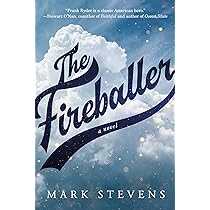
“The Fireballer Book Review” Upon occasion, you come across a novel that—if you’ll pardon the cliché—hits it out of the park. You open to page one, and by page two, you know you’re in trouble. The kind of trouble that keeps you up past midnight, ignoring obligations and questioning how little sleep you can function on the next day. The Fireballer, written by former journalist and veteran novelist Mark Stevens, is one such novel. A Baseball Novel That Reignites Love for the Game Set against the backdrop of Major League Baseball, The Fireballer transported me back to a world I once loved deeply. As a kid, I followed baseball religiously. As an adult, I drifted away—disillusioned by free agency in the early 1980s, when players began switching teams with dizzying frequency. The sense of loyalty between city and athlete felt diluted. Add the designated hitter rule (don’t get me started), and my enthusiasm waned further. But this novel rekindled something. It reminded me why baseball once mattered. What Is The Fireballer About? Plot and Premise The story follows Frank Ryder, a once-in-a-generation pitching prodigy from Denver’s Thomas Jefferson High School who signs with the Baltimore Orioles. Frank possesses a nearly mythic talent: a 110-mile-per-hour fastball that is literally unhittable. At first glance, the premise might suggest a classic sports underdog story. It’s not. Calling The Fireballer “a baseball book” undersells it dramatically. know about: Why pilots make good detectives The Fireballer Book Review as a Powerful Character Study At its heart, The Fireballer is a deeply human novel. Frank Ryder isn’t merely a pitching sensation—he’s a thoughtful, wounded, principled young man navigating a system that often demands moral compromise. The novel explores ambition, integrity, pressure, and the cost of extraordinary talent. Frank’s gift threatens to disrupt the game itself. But the greater tension lies within him. I cannot remember the last time I felt such admiration—and such ache—for a fictional character. Frank Ryder is unforgettable. Mark Stevens’ Writing Style: Elegant, Precise, and Authentic Mark Stevens writes with authority and restraint. His prose is elegant without being showy. Innovative without being overwrought. There’s a rhythm to his sentences that mirrors the cadence of baseball itself—deliberate, precise, and quietly tense. I found myself reading slowly on purpose. Lingering over passages. Re-reading sentences. Not wanting the story to end. His research is seamlessly embedded. His world-building feels airtight. Every detail rings true. As writers know, credibility is everything. One incorrect detail can shatter the illusion. Stevens never falters. He delivers the literary equivalent of a perfect game. Why The Fireballer Is One of the Best Baseball Novels in Recent Memory Whether you’re a lifelong baseball fan or someone who drifted away from the sport—as I did—The Fireballer transcends its setting. It’s about talent and responsibility. About the burden of excellence. About what it means to remain human inside systems designed to commodify you. It’s a remarkable achievement. And yes—it would make a terrific movie. Final Verdict: Should You Read The Fireballer? Absolutely. If you love baseball, you’ll appreciate its authenticity and depth. If you don’t love baseball, you’ll still find yourself drawn into a compelling, emotionally resonant story. The Fireballer isn’t just a great sports novel. It’s a great novel.
Why I Answer Every Email from Readers, And Why It Matters

Why do I answer every email from readers? Back in the day—at the dawn of the Internet and long before social media existed—I was a working investigative reporter. For nearly two decades, I worked at a daily newspaper, chasing leads, combing through dusty archives, and persuading reluctant sources to talk. I spent weeks—sometimes months—building stories meant to expose wrongdoing, uncover injustice, or shine light into bureaucratic corners where truth had been buried. I believed deeply in the public’s right to know. The First Amendment wasn’t an abstract concept to me—it was a compass. The Frustration of Writing Stories That Disappear Into the Void Sometimes, those investigations made a difference. A few launched official inquiries. Some prompted reforms. A handful made the world a little safer or more just. But more often? They landed with a thud. A few angry or congratulatory phone calls. Maybe a letter to the editor. And then the story vanished into the next news cycle. It began to feel like launching satellites into deep space—hoping for contact, only to receive static. That growing sense of futility was one reason I stepped away from daily journalism. I still wanted to tell stories. I still cared about truth, justice, and human nature. But I needed a different way to connect. From Investigative Reporter to Mystery Novelist One of those new paths was writing mystery novels. And what a different experience it’s been. Through the Cordell Logan series—including the most recent installment, Deep Fury—I’ve discovered something I rarely experienced in the newsroom: Immediate, passionate reader feedback. Why Reader Feedback Makes Writing Fiction So Rewarding Readers don’t hesitate to email me. They tell me what they loved. They tell me what confused them. They point out timeline inconsistencies, aviation terminology slips, weapon details I might have missed. To all of which I say: bring it on. Truly. Because unlike my old newsroom days—when I often felt like I was typing into a void—writing novels has connected me with a real, thoughtful, responsive community. You’re out there. You’re paying attention. And you care enough to reach out. That means everything. Why I Respond to Every Email From Readers When I was a kid, I wrote letters to my favorite authors. I sent them in care of their publishers, carefully crafted, revised repeatedly, and always accompanied by a self-addressed stamped envelope. I waited. And waited. Not one of them wrote back. I don’t regret sending those letters. Even then, I understood that writing is an act of connection. But I do wish someone had reached back. Which is why I make a point to respond to every message I receive. How to Contact Your Favorite Author (Including Me) Today, connecting with authors is easier than ever. There’s no need to track down a publisher’s mailing address. No need to buy stamps or include a return envelope. Most authors—including me—have websites with contact pages or direct email links. And if you write to me, I promise this: I will read your message personally.And I will reply. Why Author–Reader Dialogue Matters If you’ve taken time to read one of my books—whether it made you laugh, think, cry, or simply pass a few hours on a long flight—that’s a gift. If you then take the extra step to write and share your thoughts, that’s an even greater one. The least I can do is respond. So tell me what you liked. What you didn’t. What worked. What didn’t quite land. What you’d like to see next for Logan. I’m listening. Know more: The Fireballer Book Review Let’s Keep the Conversation Going Writing, at its best, is a conversation. And unlike those letters I once mailed out into silence, today’s dialogue doesn’t require stamps, envelopes, or patience measured in weeks. Just a few keystrokes. I’m looking forward to hearing from you. —David
Made My Day
When you’re an author, there’s little better than landing a positive book review, especially from someone who truly knows the craft. My gratitude to Mark Stevens, an author whose talents far exceed mine, for this terrific assessment of Deep Fury, my latest Cordell Logan mystery. https://markhstevens.wordpress.com/2025/03/28/david-freed-deep-fury/
Airplane Seat Reclining Etiquette: Is It Rude to Recline Your Seat?

I fly frequently enough on United Airlines to qualify as a “Premier” passenger. This designation, bestowed upon me as a reward for my loyalty—or at least my continued tolerance—allows me to board early and sit in what United optimistically calls Economy Plus. Economy Plus offers marginally more legroom, which is airline industry shorthand for “You will still suffer, but with slightly more dignity.” It also increases the likelihood that your carry-on bag will find refuge in an overhead bin, rather than being exiled to baggage claim purgatory. But even with these modest privileges, modern airline travel remains a test of human endurance. How Air Travel Went From Luxury to Survival There was a time when flying felt civilized. Meals arrived hot, served on actual plates with actual silverware. Flight attendants appeared calm, polished, and vaguely glamorous. The experience carried an air of importance. Today, airline cabins feel more like airborne waiting rooms designed by people who actively dislike humanity. The seats are thin. The air is stale. The temperature fluctuates unpredictably. And everyone pretends this is normal. Still, we endure. Because sometimes, getting somewhere matters more than arriving comfortably. The Reality of Flying in a Middle Seat Recently, I had to fly from California to Washington, D.C., on short notice. The only seat available was a middle seat near the back of the plane—the airline equivalent of exile. The overhead bins were full, forcing my backpack under the seat in front of me, eliminating the last remaining inches of legroom. The passengers on either side of me were large enough that our individual boundaries merged into a shared territorial compromise. Personal space became theoretical. The Moment That Sparks Every Seat Reclining Argument Shortly after takeoff, the woman seated in front of me reclined her seat completely. Not gradually. Not apologetically. Completely. Her seatback moved toward me with quiet inevitability until it hovered inches from my face. My knees pressed into the immovable barrier. My tray table pinned itself against my midsection. At that moment, I understood the true fragility of personal freedom. Why Reclining Your Seat on a Plane Creates Conflict This scenario raises one of modern air travel’s most polarizing questions: Is it rude to recline your seat on an airplane? Airlines provide the button. The option exists. But existence alone does not equal moral endorsement. Reclining in today’s tightly packed cabins doesn’t create comfort—it redistributes discomfort. It solves one person’s problem by creating another’s. The Psychology of Passenger Awareness (or Lack Thereof) As I sat immobilized, I wondered whether the woman in front of me understood what she had done. Was she aware of the chain reaction her comfort had triggered? Or was she simply operating under the assumption that permission equals obligation? Modern airline cabins encourage a survivalist mentality. Everyone protects their own comfort, often without considering its cost to others. It’s not cruelty. It’s adaptation. What Cordell Logan Would Do in This Situation Naturally, my thoughts drifted to Cordell Logan. Logan, the flight instructor and reluctant detective from my novels, possesses a clarity of purpose and willingness to confront uncomfortable truths. He likely would have addressed the situation calmly but directly, using persuasion first and escalation only if necessary. I, however, remained silent. Because unlike Logan, I am bound by social convention—and a healthy fear of becoming viral content. My Personal Rule for Airplane Seat Reclining Etiquette Here is my position on reclining your seat: If you are on a long overnight flight and everyone is trying to sleep, reclining is reasonable. If the row behind you is empty, reclining is harmless. But reclining fully on a crowded daytime flight, where the person behind you already lacks space, violates an unspoken social contract. It may be allowed. But it isn’t considerate. Why Courtesy Still Matters in Modern Air Travel Air travel today tests patience, resilience, and empathy. We cannot control the shrinking seats or the crowded cabins. But we can control how our actions affect others. Courtesy costs nothing. Awareness requires little effort. Sometimes the most meaningful gesture is restraint. Because at 33,000 feet, kindness travels farther than comfort.
Deep Fury: When My Mystery Novel Title Met an Australian Racehorse

All I know about horse racing is what I learned from reading Seabiscuit by Laura Hillenbrand—and watching the movie adaptation. Both told the story of an underdog horse and a down-on-his-luck jockey who triumphed during the Great Depression. In college, I also read The Reivers by William Faulkner, which, if memory serves, involved horses somewhere in the mix—though mostly it was about three rascals stealing a car in Mississippi. Beyond that? My horse racing expertise is limited to a few Kentucky Derby parties, where I was more focused on snacks and socializing than the finish line. Which makes what happened next all the more surprising. Watching Horse Racing at Hollywood Park (Once) I’ve seen live horse racing exactly once. Years ago, my wife and I spent an afternoon at Hollywood Park, a thoroughbred track once located near Los Angeles International Airport. The track has since been demolished, replaced by a football stadium. That day, we placed a few $2 bets based entirely on instinct and the aesthetic appeal of the jockey silks. We did not retire wealthy. An Email From Australia About Deep Fury Recently, I received an email from a reader in Australia named William, who wrote to say how much he enjoyed Deep Fury, my latest Cordell Logan novel. He also asked whether I’d named the book after an Australian racehorse called Deep Fury. I had no idea such a horse existed. “Mere coincidence,” I replied. “And what kind of name is that for a horse anyway? What do they call him for short—Deep?” William, who tends bar at a swanky hotel in Brisbane, responded with the obligatory joke about a horse walking into a bar. I’m still working on my comeback. Meet Deep Fury the Australian Racehorse Naturally, curiosity got the better of me. A bit of online research revealed that Deep Fury the horse is a five-year-old bay gelding who runs at the Sunshine Coast Turf Club, located near the charmingly named towns of Currimundi and Caloundra in Queensland, Australia. As of this writing, he has run 27 races and won two, earning purses totaling roughly $95,200 Australian dollars. Not exactly Seabiscuit money—but respectable. And undeniably handsome. How Authors Choose Book Titles (And Sometimes Coincidences Choose Them) When I chose the title Deep Fury for my Cordell Logan novel, I wasn’t thinking about horse racing. The title reflected the emotional undercurrents of the story—the hidden rage, the submerged motives, the simmering tensions beneath calm surfaces. Discovering that a real racehorse shares the name reminded me of something I’ve always loved about storytelling: Fiction and reality intersect in unexpected ways. Writers think they are inventing. But sometimes, they are merely tapping into currents already flowing through the world. Why Coincidence and Kismet Matter in Mystery Writing As a mystery writer, I thrive on intersections—on twists that feel surprising yet plausible. Life often behaves the same way. An email from halfway across the globe. A joke at a bar in Brisbane. A horse named Deep Fury running along the Sunshine Coast. It may be coincidence. Or it may be the kind of narrative symmetry that makes storytelling feel magical. When Real Life Mirrors Fiction Writing mysteries means layering intrigue, planting clues, and allowing unexpected connections to surface. Learning about the horse Deep Fury felt, oddly enough, like stumbling onto one of my own plot twists. A small reminder that stories do not exist in isolation. They echo. They overlap. They collide in ways we could never anticipate. Final Thoughts: The Next Plot Twist Could Be Anywhere If there’s a lesson here, it’s this: The best stories often arrive from the most obscure places. From an email. From a joke. From a horse halfway around the world. Whether in fiction or real life, discovery is what keeps us moving forward. And who knows? The next twist might already be galloping toward us.
Why I Wear a Tuskegee Airmen Hat: Honoring the Fighting 99th

Most folks, I suspect, have a favorite ball cap. Mine is sweat-stained, sun-faded, and frayed at the brim. It features a blue-and-gold winged panther—the insignia of the 99th Pursuit Squadron, better known as the Fighting 99th. In all the years I’ve worn it, only one person has ever recognized the patch. We were in a restaurant in Colorado Springs when the hostess—a young woman in her early twenties—smiled and said, “I like your hat. The Fighting 99th.” I was stunned. That someone so young immediately recognized the insignia of the all-Black Tuskegee Airmen left me speechless. “My great-grandfather,” she said proudly, “was a Tuskegee airman.” The pride in her voice is something I’ll never forget. The Tuskegee Airmen and the Legacy of the 99th Pursuit Squadron The Tuskegee Airmen are among the most inspiring figures in American military history. The 99th Pursuit Squadron—later part of the famed “Red Tails”—was composed of Black fighter pilots who trained in segregated Alabama before deploying to Europe in World War II. Despite facing discrimination at home, they distinguished themselves in combat against the Luftwaffe, earning respect in the skies even when denied it on the ground. Their aircraft tails were painted red, giving rise to the nickname “Red Tails.” Decades later, when the U.S. Air Force named its new Boeing-Saab T-7 trainer the “Red Hawk,” the choice honored the Tuskegee legacy by painting the jet’s tail red. Their story is not simply one of military achievement—it is one of perseverance in the face of systemic injustice. Why the Fighting 99th Patch Still Matters Today I’ve always dreamed of flying a P-51 Mustang. I never have. I was born long after World War II, and I’m not Black. So what business do I have wearing a Tuskegee squadron patch? The answer is simple: gratitude. Every time I wear that hat, I’m reminded of the debt we owe to the Tuskegee Airmen and to the millions of Americans—of every background—who fought to leave this country better and fairer than they found it. Their courage transcends race. Their legacy belongs to all of us. The Tuskegee Airmen Training Video Controversy Recently, reports surfaced that the Air Force had removed videos about the Tuskegee Airmen and the Women Airforce Service Pilots (WASPs) from its basic training curriculum in response to broader diversity policy changes. Public backlash followed swiftly. Within days, the decision was reportedly reversed, and the videos were restored. It is difficult to imagine what harm could come from teaching new recruits about courage, sacrifice, and excellence. But it is easy to imagine the harm that comes from erasing such stories. Why Preserving the Legacy of the Red Tails Is Essential To marginalize the contributions of any group is to distort our shared national story. The Tuskegee Airmen fought not only a foreign enemy, but prejudice within their own country. They succeeded through skill, discipline, and moral resolve. Their story is a reminder that ability is not defined by race or gender, but by character and commitment. When we diminish such narratives, we diminish ourselves. Wearing the Hat as an Act of Remembrance Until it falls apart from wear, I will continue wearing my Fighting 99th cap. Not as a political statement. Not as provocation. But as remembrance. The Tuskegee Airmen—and the WASPs who ferried aircraft across oceans—served not for celebrity, but because they believed in the promise of a more just America. We honor them not by slogans, but by telling their stories. Because “Make America Great” is not a catchphrase. It is courage. It is sacrifice. It is devotion to an ideal that demands continual effort. The Red Tails paved a runway for generations to follow. The least we can do is ensure their story never fades from view.
Between What Once Was and What Could Have Been

What happens when you write a novel, setting much of it in the real world, and then part of that real world is erased before the novel can be published? This was my dilemma in writing The Impossible Turn, my eighth and newest Cordell Logan mystery. A fair amount of the story originally took place in Malibu, California, where I drew references to actual streets I’ve driven on over the years, real stores where I’ve shopped, and landmark restaurants like Moonshadows and the Reel Inn, where I’ve enjoyed more than my share of good seafood. I was a couple of days away from finishing and emailing the completed manuscript to my agent when the Santa Anas began blowing last week at hurricane strength. Suddenly, it seemed, much of Los Angeles was burning. I reside up the coast and far enough away from all the fires that my family and I were not threatened. My greater and more immediate concern, of course, was for the safety of many friends and former colleagues who live in the LA area, particularly those I worked with at the Los Angeles Times. At least half-a-dozen, and likely others I’m not aware of as I write this, lost their homes. I can’t begin to imagine their anguish, nor that of the thousands of other victims of what may prove to be the most expensive natural disaster in modern American history. And so, it is the context of that almost incomprehensible tragedy that I hope you’ll forgive my bemoaning the relatively trivial inconvenience of having to rewrite a work of fiction to keep up with current events. Such, however, is the lot of any novelist who aspires to achieve believability in the make-believe stories they spin. As the smoke began clearing and the extent of the catastrophe became known, I reread the latest draft of The Impossible Turn and confirmed what I already feared–that neighborhoods I’d included in detail had burned to the ground. My need to rewrite was obvious; how I would go about that rewrite was less so. I figured I had three options: I could revise the plot and have the story play out well before the fires, making no mention of the catastrophe, but that struck me as contrary to my previous books, all of which were intended to convey a sense of current day. I envisioned getting letters from confused readers demanding to know, “When exactly does this book take place??” Or… I could set the story after the fires. But given that it takes at least a year and typically longer before a finished book finally hits the shelves, I realized I could not predict with any accuracy what the aftermath of the fires might look like. Will Pacific Coast Highway, where oceanfront mansions once stood, still be ash and rubble, or will reconstruction be well underway? Hey, I’m merely a humble scribe, not a fortune teller. Or… I could erase from my story any reference to Malibu and the Palisades and simply shift that part of the plot a few miles inland to, say, the Hollywood Hills. In the end, it was this third option that seemed most viable to me. If you’ve ever spent time in the LA basin, you might better understand why I made the choice I did. The late Dorothy Parker once described Los Angeles as, “Seventy-two suburbs in search of a city.” She wasn’t wrong. The sprawling, amorphous mass known as LA, with its more than 18 million residents, defies the traditional definition of community. If you live in Beverly Hills, for example, or basically anywhere west of LaCienega Boulevard, you’re likely not much interested in what goes down in Compton or out in Pacoima. Indeed, it’s been my experience that Angelenos, figuratively speaking, tend to wear blinders. They embrace a mindset that says, in effect, “Good or bad, if it didn’t happen in my immediate neighborhood, it didn’t happen. Period.” Believe me, I know of what I speak, having lived there for ten years. My children back then attended school at Mt. Washington Elementary, which was right around the corner from our house. Every morning after dropping them off, my wife and/or I would spend a few minutes chatting in the parking lot with other parents, our neighbors. On one particular Monday morning, I can vividly remember expressing my concern about a shooting that had occurred the previous Saturday night in nearby Glassell Park. A young family like ours had taken an unfortunate turn down a wrong street, where gang members opened fire on their minivan in the mistaken belief that those in the vehicle were rival thugs. A toddler was killed in her car seat. Two days later, standing there outside our local elementary school, my neighbors seemed not to share my concern about what had happened. “That was Glassell Park,” one of the other dads said, “not Mt. Washington.” For the record, Glassell Park is more or less adjacent to Mt. Washington, and about a mile away as the crow flies from where we were gathered in that parking lot. It was that kind of isolationist, denialism thinking, that ultimately compelled my wife and me to decamp with our kids and move away from LA. My neighbors’ disregard over what had happened to that family in Glassell Park is little different, I’m convinced, than what will likely occur in the aftermath of last week’s firestorms. Many Angelinos not directly affected by them will soon forget they ever occurred. They’ll put their blinders back on and go about their lives in their little corners of those seventy-two suburbs as if nothing ever happened. But who knows? Maybe that kind of collective memory loss is a good thing for novelists. It provides the perfect soil in which to grow fiction, where the rawness of tragedy and fragility are reshaped into something surreal and profound. Amid Los Angeles’ boundless distractions, all
Chaucer Book Signing – Jan 16 at 6 pm

Date:01/16/2025 Time: 6:00pm – 7:00pm Place: Chaucer’s Books3321 State StreetSanta Barbara, CA 93105-2623 Join bestselling author David Freed for a thrilling evening of mystery and suspense at his book signing event for “Deep Fury”! Mark your calendars for January 16, 2025, at 6:00 PM and prepare to delve into the captivating world of Cordell Logan, a former government assassin turned flight instructor, as he navigates a treacherous web of deceit and danger in the seventh installment of the acclaimed Cordell Logan Mysteries series. In “Deep Fury,” a bizarre murder plunges Logan into a high-stakes investigation that will challenge his skills and test his loyalties. When a naked man falls from the sky and crashes into a mobile home, Logan is drawn into the mystery surrounding the victim’s identity and the motive behind his gruesome demise. As he digs deeper, he uncovers shocking secrets and realizes that nothing is as it seems. This gripping thriller will take you on a whirlwind journey across California and deep into Mexico, as Logan races against time to uncover the truth and avenge his fallen comrade. With twists and turns that will keep you on the edge of your seat, “Deep Fury” is a must-read for fans of mystery, suspense, and action-packed adventure. Don’t miss this opportunity to meet David Freed, get your copy of “Deep Fury” signed, and hear firsthand about the inspiration behind this thrilling new addition to the Cordell Logan Mysteries. Event Details:
My Jimmy Carter Moment

Several years ago, on a dark day of deep despair, a silly idea came to me—one that would eventually become a silly book, while finding me crossing paths with a former President of the United States who was anything but silly. I was working back then in the entertainment industry, writing film scripts for the major studios, TV networks, and independent producers. My annual income could best be described as boom or bust. Some years I earned very little. In others, I made vastly more money than I could’ve ever begun to imagine at the Los Angeles Times, where I had toiled as a reporter for more than a decade. On balance, it was a comfortable living, one that allowed me to escape Los Angeles with my family and buy a home with an ocean view two hours up the coast in lovely Santa Barbara. But the more time I spent writing movies, the more disillusioned and frustrated I became. I grew tired of fighting LA traffic and having to attend pitch meetings to propose my movie ideas that more often than not went nowhere; of being jacked around by conniving development executives who professed to love my ideas, then hired other screenwriters to write them; and of seeing my best scripts get rejected outright or rewritten so extensively that by the time they were produced—what few actually made it to the screen–they bore scant resemblance to my original work. Thus it was while sitting at my desk one afternoon, stewing over my latest misadventure in Hollywood, that the idea hit me: I need to find another job. Suddenly, as if guided by some occult hand, I found myself typing up a list of possible employment opportunities, each one more preposterous than the next, but any one of which, I was convinced, would be way more fun than screenwriting. I could become a chair tester for La-Z-Boy, getting paid to sit on my duff all day. Maybe I could shoot hoops for the Harlem Globetrotters, or go be a wine taster for some major vintner (back then) like Ernest and Julio Gallo. I could train whales for Sea World. I could sing with the Mormon Tabernacle Choir. The list of dream jobs became virtually endless! My one big problem, I realized, was that I was uniquely unqualified to take on any of those jobs. But then I thought, Wait a minute. This is America! Since when did a lack of qualifications stop anybody from doing anything? And so, more for grins than the prospects of actual gainful employment, and just to see what kinds of responses I’d get, I began mailing out dozens of goofy application letters under the nom de plume, “Fred Grimes,” a likeable, somewhat less-than-articulate guy with a can-do, never-say-die attitude who’d unfortunately lost his job “down at the plant”, and was looking to reinvent himself in the Land of Opportunity. The letters spawned replies that ranged from equally goofy to deadly serious. The head of the Tabernacle Choir pointed out rather stuffily that one had to be a member of the Mormon Church with “considerable training and vocal experience” to join his choir—and that each vocalist was a volunteer. The job, he said, didn’t pay a dime. Meanwhile, over at Gallo, the head of consumer relations wrote back to report that, “Unfortunately, if we had a job of wine taster, the applicant’s line would indeed be quite long. Sorry!!” Sea World in San Diego responded with, “Although we were impressed with your resume, we have found other candidates who more closely suit our needs at this time.” Fred had sent no resume; only that he “had a way with animals” after having trained the family cat to do a few tricks. The Globetrotters, to whom Fred had written admitting that he was just “an average unemployed American who is white”, and who couldn’t play basketball to save his life, but who could “whistle the heck out of Sweet Georgia Brown”, the Globetrotter’s theme song, got the joke. They responded with a friendly thanks but no thanks while urging Fred to, “Keep whistling!” Then Fred wrote to Jimmy Carter. “You’re making a big mistake building all those houses for the poor,” he advised the former President. “Sir, why not build houses for the rich? You could call them ‘Jimmy Carter Homes,’ or ‘Homes by Jimmy Carter.’ I bet a lot of rich folks would buy them just to tell their friends, ‘Guess who hung my drywall?’ Fred bragged that he was pretty handy around the house, having recently installed a new kitchen sink, and urged the former President to hire him as his construction foreman. A couple of weeks later, I ventured outside to the mailbox to find an envelope bearing a return address in Plains, Georgia–the same address I was to discover later where Carter in 1961 had built a modest, ranch-style home while helping run his family’s peanut farm and warehouse business, and where he and his wife, Rosalynn, still resided. Folded inside the envelope was the original letter I had sent him as Fred Grimes. Hand-written on the upper-right corner was a note from Carter himself: “Fred—Thanks for your idea. When all the poor have homes, we can start on the rich. –Jimmy C.” That letter, and dozens of others from Fred, along with their responses, would eventually find their way into a modest, nonfiction book–Dear Ernest and Julio, the Ordinary Guy’s Search for the Extraordinary Job, by Fred Grimes, with David Freed. Published by St. Martin’s Press, it’s been out of print for a while, but you can still find used copies for cheap on eBay if you’re at all interested. Not long after Dear Ernest and Julio was published, my wife and I visited Plains, Georgia. It was an easy drive from Albany, Georgia, where I was born, and not far from Fort Benning, where our