
THANK YOU, MISS VALLEY

Some writers are born. Others are made. I’m from the latter camp. Nowhere in my ambitions while growing up was there the notion that one day I might earn my keep via the printed word. I planned on becoming a physician, a heart surgeon, to be more specific—at least that’s what I told adults whenever they asked what I wanted to be when I became one of them. They seemed impressed. That I ended up paying the bills not by cracking chests but by stringing sentences together is only partially explained by the fact that I lacked any real desire to be a doctor in the first place. I wasn’t sure back then how I wanted to spend my life. That I ultimately became a working writer happened only because to land in the classroom of English teacher Aurelia Valley. Miss Valley was what some might describe today as a Big Beautiful Woman minus the “beautiful” part. She wore her dark hair short and stringy and unwashed in an outdated bob, parted to one side. She favored featureless, flat-soled shoes, rimless glasses, and cheap, shiftless pattern dresses that hung on her like potato sacks. She had a small, upturned nose that drew comparisons to that of a pig, and I seem to recall her breathing mostly through her mouth. To my recollection, she never smiled. The less sensitive among my classmates frequently made fun of the way she looked. Truth be told, I probably did, too, if only to fit in. To say that the high school in which Miss Valley labored was blue collar would be like saying the Pope is religious. We had no honors classes (though we always fielded a powerful football team). Relatively few students went on to four-year universities. It was the kind of school where landing a job at the post office after graduation was considered high achievement. Reading and writing reports about Shakespeare, Beowulf, Last of the Mohicans and the other classic works of literature that Miss Valley strived mightily to make us adore as much as she did was antithetical to my bored, distracted classmates, and to me. But that never seemed to deter her. Miss Valley taught passionately. One afternoon midway through my senior year, after the bell rang and everyone else emptied out of her classroom per usual like Russian nukes were inbound, she asked me to stay behind for a few minutes. I was embarrassed. What would my buddies think? That Miss Valley was sweet on me? I wanted to run. Only I couldn’t. She had blocked the doorway with her ample frame. “You should think about being a writer,” Miss Valley said. “You have an aptitude.” I don’t recall what transpired between the two of us after that, only that I was struck by the realization that it was the first time anyone had ever told me that I had an aptitude for anything other than griping about having to shovel snow from the front sidewalk or mow the lawn. Flash forward a year or so later. I was in college, a pre-med major nursing a 2.2 GPA–hardly the kind of grades that’ll get you into Harvard Medical School. I’d discovered beer and girls by then, and I knew, given my paltry academic performance, that I performing heart transplants was definitely out of the picture. And so, one night in my dorm room, while thumbing through the university’s course catalog, struggling to figure out what the hell to do with the rest of my life, I happened upon the requirements for a degree in journalism. In that moment, I swear I heard Miss Valley’s voice as if she were standing right beside me: “You should think about being a writer. You have an aptitude.” And so I became one. Upon graduation, I landed a newspaper job in a town where I soon met an intelligent, beautiful young woman who eventually would become my wife. We remain happily married more than three decades later. We have two wonderful children and live in a fine home overlooking the Pacific. It is hardly hyperbole to say that my life would’ve been far less fulfilled had Miss Valley not kept me after class that day. Indeed, had it not been for here, I never would’ve written Flat Spin and the many other Cordell Logan mysteries that have followed. Aurelia Valley passed away in 1996. I foolishly never took the time to express my appreciation to her before she passed on. This will have to do. Thank you, Miss Valley. For everything.
ON BEING A PLOTTER

“Where do you get your ideas?” It’s a standard question writers are asked at conferences where readers and authors get together to celebrate the genre of mystery-thrillers. It’s also a question I never know how to answer. Inspiration is an elusive thing. For me, it defies explanation. Don’t ask me how, but I could be taking a shower, watching TV, eating a burrito, or sleeping, when—bam!— the notion of a plot for a new book will hit me like a bolt out of the blue. Most of those notions go nowhere because they’re either half-baked, been done before, or just plain goofy. But every so often, one will passes muster. And that’s when the hard work starts. There are essentially two types of writers of mysteries: the “panster” and the “plotter.” A pantser fliesby the seats of their pants, not knowing from one day to the next which way the plot is going or how in the name of all that is holy their hero will ever solve the crime. Writers who follow this approach are convinced that if they don’t know ahead of time which direction their story is unfolding, neither will their audience, making for a less predictable, more compelling read. I’ve tried it that way. Repeatedly. It’s not gone well. I’ve spent days in teeth-gnashing, hair-pulling confusion trying to keep track of all my character, and wasted weeks writing myself down dead-ends that ended up with me pressing “delete.” All of which explains why I’m a card-carrying plotter. I map out my books before I ever sit down to write a word. It’s akin to putting together a flight plan. I prefer navigating from point-to-point rather than drifting on the wind, hoping I have enough fuel to reach my final destination. The first thing I do is come up with the beginning, middle, and end of the story. What is the crime that gets the action going? How does Cordell Logan logically get involved in solving that crime? What hurdles will he encounter along the way that might prevent him from achieving his goal? Who is the bad guy that will be revealed in the end? After that, I start putting meat on that skeleton. I write a brief synopsis of each scene as I envision it. I aim for at least 30 scenes. The finished outline typically is no less than 15 single-spaced pages–enough that I’m confident I have enough material to tell a complete story. My outline, however, is hardly gospel. The story will invariably evolve along the way. Some if not many of the scenes I conceived initially will prove themselves illogical or unworkable. Better plot twists will come to me as my characters come to life. It’s when the characters begin talking to each other that I know I’m in the groove. Your characters talk to each other? Have you seen a psychologist lately? Actually, I live with a psychologist. And, yes, I know it sounds a little crazy, but that’s how it works. If you have any ideas for Logan’s next adventure, please let me know.
MEMORIES OF LANDSCAPE

Early in my journalism career, I had the pleasure of interviewing Gregory “Pappy” Boyington, a Marine Corps fighter ace and Medal of Honor recipient whose exploits fighting the Japanese in the Pacific during World War II inspired his best-selling memoir, “Baa, Baa Black Sheep,” and, later, a popular television series based loosely on his book. I asked Boyington in our conversation if he thought he was born he was born to be a fighter pilot. “Hell, no,” he shot back. “I wanted to be a 17th Century buccaneer. I was just born too late.” I know the feeling. In the pantheon of “people I wish I had been,” World War II fighter pilot ranks right up there. Unfortunately, or perhaps fortunately, like Pappy Boyington, I too was born much too late. Which may explain why, when it comes to reading for vicarious pleasure, I particularly enjoy nonfiction memoirs like his. I’ve read a ton of them over the years, marveling at the heroism of their authors. Their bravery remains unquestionable and unmatched. The caliber of their prose remains another matter. Most such books were penned by men who never aspired to be wordsmiths. They were combat pilots. Sky-borne war daddies. Even when their books were ghost-written by professional scribes, the finished product, however engaging, rarely approached anything resembling literature. Which is why I remain so impressed after recently finishing Flights of Passage: Reflections of a World War II Aviator by Samuel Hynes. Hynes, who died in 2019, was a Midwestern boy barely 18 when he left home and learned to fly torpedo bombers. He logged 78 combat missions in the Pacific before the fighting stopped, gaining in the process a Distinguished Flying Cross and a depth of insight into war—the boredom, the madness, the absurdity, the exhilaration—I’ve rarely derived reading other, similar books. No less significantly, Hynes captures elegantly the sheer joy of being aloft without anyone shooting at you–that wondrous, ethereal bond between all pilots, be they civilian or military, and their flying machines. Consider this bit of eloquence: “Memories of flying are almost always memories of landscape. It isn’t that you think I’m flying over this state or that one, but that you are moving above a landscape pierced by a mountain, or patched with woodlands, or edged by the sea. The earth is always there below, apart and beautiful (no land is ugly from the air), revealing its private features in a way that it never does to the traveler on the surface. A pilot can see where a road goes; what is over the hill, the shape of lakes and towns; and I suppose this knowledge of the earth’s face is a part of the feeling of domination that a pilot feels when his plane reaches a commanding altitude and he looks down on the world that stretches out beneath him.” I was not surprised to learn that after the war, Hynes became a distinguished scholar, literary critic, and the Woodrow Wilson Professor of Literature at Princeton University. I only wish I had discovered Flights of Passage before he flew West, to tell him how much I relished it.
HIGHWAY TO THE RIDICULOUS ZONE

I love airplanes. I will happily watch any movie with airplanes in it, even computer-animated cartoons featuring airplanes. Not long ago, I had the pleasure of watching Disney’s charming Planes for the first time. It’s the story of Dusty Crophopper, a lumbering, loveable crop duster from Propwash Junction who aspires to compete in a big air race. My little grandkiddos had seen the film easily a dozen times but were happy to watch it yet again with me, in much the same way I’ve watched Top Gun over the years, over and over. Did I care the first time I saw Top Gun (or the last time, for that matter) about the movie’s abundant cheese factor? About the less-than-zero chemistry between Kelly McGillis and Tom Cruise? About the gaping plot holes? Nope. I’m an unabashed Cruise fan and Top Gun offered in my opinion among the best openings of any movie ever made, with its stylish and exciting montage of aircraft carrier flight deck operations. I was hooked from the opening frames and willingly went along for the ride. And thus it was, with an open mind, that I recently sat down and rewatched the sequel to Top Gun—Top Gun Maverick. The first time I saw the sequel was last year in a movie theater. Flying scenes aside, which were great, I was alone among my family members in thinking that the film was pretty lame. Maybe it was because I spent a decade working as screenwriter in Hollywood, penning more than my share of marginal movie scripts, and grew too adept at seeing the flaws in the work of other writers as well as my own. Or maybe it was my admitted envy as a pilot that Cruise owns a beautifully restored P-51 Mustang fighter and got to do catapult shots off carriers in Navy F/A-18 Super Hornets while filming Top Gun Maverick Whatever the reasons, I found myself after about twenty minutes into the sequel looking impatiently at my watch and rolling my eyes at its abundant contrivances, the preposterousness of its all-too-predictable plot, and the flagrant theft of story devices from other blockbuster movies. My mind began to drift. Could the same criticisms apply to my own work? Were my Cordell Logan novels like Voodoo Ridge and Hot Start derivative of mysteries written by others? I sure hoped not. I purposely go out of my way not to read any fiction when I’m writing for fear of inadvertently borrowing plot twists and writing styles. Anyway, much as I had hoped otherwise, I’m sad to report that my opinion of Top Gun Maverick changed little from having watched the flick the first time. I won’t catalogue my many specific grievances except for the following. At the end of the first Top Gun, Tom Cruise’s Pete “Maverick” Mitchell saves the day by splashing three enemy MiGs, thus becoming—as the sequel points out— the first American fighter pilot to have done so in the past 40 years. In the sequel, thirty-six years later, he’s hanging out at a dive watering hole in San Diego where an old girlfriend tends bar. In strolls a group of the Navy’s hottest fighter jocks who somehow don’t recognize Maverick and have no idea he’s been brought in to train them for a top-secret mission. Maverick’s wearing his official Navy flight jacket festooned with squadron patches and looking every inch like the cool guy, albeit aging Navy aviator. I’ve had the honor of hanging out in a few of those dives with a few of those cool guys. Believe me, if a Top Gun legend like Maverick was sitting at the bar nursing a brewski, word would spread quickly among other fighter jocks that they were in the presence of greatness, and the beers would be on them the rest of the night. In the movie, however, the cocky newbies treat Maverick like he’s an over-the-hill wanna-be before literally tossing him out of the bar on his ass. Call me picky, but by that point, I was having none of it. So, sorry, Tom Cruise. I guess you could say I’ve lost that lovin’ feeling. As the old expressing goes, “Any landing you can walk away from is a good landing.” Top Gun Maverick was not one of them. That said, Tom, buddy, if you ever happen to read this, and you’re looking for somebody to go for a hop with you in that gorgeous P-51 of yours, I’ll be there with my hair on fire.
The Kill Circle

A father and son hunting deer in the mountains of Colorado happen upon a stunning sight: a vintage sports car laying upside down in an icy stream, its elderly driver dead behind the wheel. The local sheriff’s department rules it an accident; the driver was apparently going too fast, missed a hairpin turn on a snow-covered road, and fell off a cliff to his death. Officials at the Central Intelligence Agency fear otherwise. The driver, Rico Perris, was the second retired CIA intelligence analyst to turn up dead in as many weeks under uncertain circumstances. Both victims were once assigned to a top-secret, internal review of CIA documents that delved into the agency’s long-rumored involvement in the assassination of President John F. Kennedy. Were they killed as part of a continuing cover-up to prevent the public from learning the truth of what happened that fateful day in Dallas in 1963? Cordell Logan’s former Alpha teammate, Buzz, who still works in the intelligence community, wants him to help investigate what looks increasingly like an ominous conspiracy. Logan would just as soon be left alone, content to operate his small civilian flight school in swanky Rancho Bonita–until Buzz introduces him to Layne Sterling, a brilliant, beautiful CIA case officer assigned to the investigation. Working together while pretending to ignore their simmering mutual attraction, she and Logan are soon caught up in a high stakes. cat-and-mouse game with powerful forces unknown, a game that could destroy them both. Facebook Instagram Tumblr The Kill Circle Studio Review Order Now Praise for The Kill Circle “Ex-military assassin Logan possesses both a quick wit and a thick skin. Another fast and highly enjoyable read by the talented Freed. Carl Hiaasen meets Randy Wayne White.” –Booklist “Entertaining, thrilling and, at times, absolutely hilarious. This is exactly how David Freed writes and why I buy his books. The plots are strong and fast paced, the characters are well defined and although the stories are very serious by design, there are also filled with lots of laugh-out-loud moments.” –Victor Dima, the AudioBookBlog “The Kill Circle is a fierce, often frenetic, and surprisingly funny novel whose characters are as complex as the plot they’ve been written into. The author deftly balances investigative savvy and romantic intrigue with subtle touches of backstory and ruminations on an event that’s haunted America for more than half a century. Despite the enormity of that topic, Freed never gets bogged down in its minutiae, resulting in a book that should satisfy both genre enthusiasts and assassination buffs, regardless of which side of the conspiracy/lone gunman debate they fall on. Ultimately, it’s the mystery and mastery of Cordell Logan that will sustain readers—and demand that they do their own recon on one of the great series protagonists of our time.” –John Valeri, The Criminal Element Complete Book Review from CriminalElement.com, written by John Valeri: There’s something to be said for writing what you know. David Freed, an instrument-rated pilot who has also worked extensively in the United States intelligence community, uses insider intel to inform the characters and circumstances that propel his Cordell Logan mysteries. Further, he is a Pulitzer Prize-winning journalist, screenwriter, and teacher—all disciplines that are evident in the breadth of his fiction. The Kill Circle—the series’ sixth entry—finds Cordell Logan contentedly retired from his former life as an assassin for the government. Now, he is residing in posh Rancho Bonita, California, where he inhabits a garage apartment with his non-sociable cat, Kiddiot, keeps company with his elderly dynamo of a landlady, Mrs. Schmulowitz, and operates a small civilian flight school nearby. Despite his training and former occupation, Logan is an aspiring Buddhist; still, certain personality types and proclivities—such as the uncivilized brute he encounters in Chapter Two—give him pause: Once upon a time, I wouldn’t have waited to discuss those things. We would have continued the conversation right then and there, and our little talk would have ended with him in intensive care or, quite possibly, the morgue. But with maturity, if you’re at all fortunate, comes the dawning awareness that 10 percent of life is what you make it; the other 90 percent is how you take it. You learn when to pick your battles and the wisdom that most battles ultimately aren’t worth fighting to begin with. Discovering Buddhism late in life had helped me understand that lesson, even if I sometimes fell well short in practicing it. The yin and yang. The lover of peace. The purveyor of death. I didn’t want to harm anyone but I would if I had to.Of course, relative peace doesn’t make for a compelling whodunit. Consequently, Logan’s solitude is broken when he receives a call from a former comrade-in-arms, Buzz (who is still active in the intelligence community), asking him to assist in a sensitive matter that has ties to the JFK assassination. Though Logan initially declines the assignment, the allure of Layne Sterling, a fellow agent whose beauty is matched by her intelligence and quick wit, causes him to reconsider; he finds himself attracted to Sterling in a way that he hasn’t been to any other woman since his deceased ex-wife. This unexpected surge of emotions is one that both tantalizes and terrifies him, adding to the narrative tension. I liked her smile, the gentle way she teased me, her self-confidence. At what point, I wondered, does liking someone start to add up to something more than that? I was about to do something I’ve rarely done—share with a woman what I was starting to feel for her—when a waiter showed up and interrupted the moment. He was a tall, chiseled twenty-something, with long sideburns, carefully cropped stubble, and an arrogant air that suggested little trouble with the ladies.Their assignment—particularly timely, given the impending release of our government’s final batch of classified documents on the case—is to quietly investigate the deaths of two men who have perished within weeks of one another under questionable circumstances. Both were former intelligence analysts who once
The Three-Nine Line

More than forty years after being freed from the infamous “Hanoi Hilton,” three aging former American prisoners of war return to Vietnam at the urging of the U.S. State Department. Their mission: to shake hands and finally make peace with their most brutal former captor, a guard they’d once nicknamed, “Mr. Wonderful.” Washington hopes the reconciliation will help cement an ambitious, multi-billion dollar trade agreement between the United States and Vietnam. But when Mr. Wonderful is found murdered, communist officials accuse the ex-POWs of the guard’s slaying, and the trade agreement threatens to fall apart. Enter Cordell Logan. Working with a newly formed intelligence unit that answers directly to the White House, Logan is dispatched undercover to Hanoi with two objectives: identify the real killer of Mr. Wonderful, and somehow get the former POW’s out of Vietnam before they can be tried by a kangaroo court and sentenced once again to prison. The mission will test every ounce of Logan’s resourcefulness and resolve, putting him in danger as never before. Facebook Instagram Tumblr The Three-Nine Line Studio Review Order Now Praise for The Three-Nine Line “A well-written thriller with enough plot twists to keep both Logan and readers wondering what will happen next. Along the way, the story explores raw feelings that still exist among veterans on both sides of the Vietnam War and touches on a host of contemporary issues from spy satellites to human trafficking. But what makes each Cordell Logan novel especially enjoyable is spending time with the protagonist, whom Freed allows to narrate his own story. Logan is affable, funny, and introspective. Through four books now, he’s still trying, and often failing, to apply the principles of Buddhism to a life that’s in constant conflict with them. And, unlike many of today’s action heroes, he is uncomfortable with the violence he is so capable of and does his best to avoid it.” –Associated Press “A nifty detective story with juicy writing and a very likeable hero.” –Kirkus Reviews “The Three-Nine Line is an efficient and satisfying standalone mystery with a dollop of political commentary about the Vietnam War to give it some heft and enough red herrings to keep most mystery fans hooked. Cordell Logan’s shadowy network of former special ops colleagues—and his real life readers—probably couldn’t ask for a better friend.” –Book Browse “Outstanding…Freed pulls off the remarkable feat of writing an entertaining, first-class suspense yarn while addressing serious political and personal issues in an evenhanded, informed manner.” –Publishers Weekly Order Now
Voodoo Ridge

At the height of the Cold War, a twin-engine Beechcraft bearing top-secret cargo departs from the Santa Paula Airport near Los Angeles and disappears into a blinding rainstorm. Six decades later, on a flight over the Sierra Nevada Mountains of northern California, flight instructor and former military assassin Cordell Logan discovers what appears to be aircraft wreckage strewn on a remote, all-but-inaccessible, alpine hillside. His life as he knows it will never be the same. Logan and his beautiful ex-wife Savannah have planned a weekend getaway in the ski resort of Lake Tahoe. But upon landing in the Ruptured Duck, his aging Cessna, Logan agrees to put those plans on hold to help lead a sheriff’s search and rescue team to the mountainous crash site. The team finds the long-missing airplane with the mummified remains of its pilot still at the controls, along with something much more recent and far more sinister: the body of a local young man, apparently shot to death only hours earlier. Someone has beaten the rescuers to the site to salvage the plane’s mysterious cargo and will clearly do whatever it takes to profit from it– including kidnapping and threatening to kill Savannah if Logan refuses to help them carry out their illicit plans. With the clock ticking and the love of his life in jeopardy, Logan finds himself drawn into a pulse-pounding whirlwind of a mystery as dangerous as any he had ever known. Facebook Instagram Tumblr Voodoo Ridge Studio Review Order Now Praise for Voodoo Ridge “The tension-packed plot and the fine prose, including well-drawn characters and vivid portraits of the natural landscape, are just what fans have come to expect from this author.” —-Bruce DeSilva, the Associated Press “Freed has a serious surprise in store for the reader this time, and he skillfully builds up to the shocker. The unusual pilot- sleuth premise, the jaunty style, and the genuine suspense combine to make this one a thoroughly entertaining installment in what has become a fine series.” –Booklist “This is…an economically told thriller which makes the simplicity of a linear plot a delight to watch. The tension is skillfully maintained as we watch Cordell’s sense of duty collide with his love for his ex-wife….My delight in Voodoo ridge is not saying I want all my books to be grim, but there does come a point when the endless sunlight of modern fiction becomes tiring and a healthy dose of reality is appreciated. If you enjoy thrillers with a darker edge, this is a superb example of the form and you should snap it up.” –Thinking About Books Order Now
Flat Spin

Flight instructor Cordell Logan is a man with a dark history and dwindling savings who shares a converted garage apartment in California’s ritziest beach towns with the world’s most intellectually challenged cat. A quick-witted, sardonically humorous man struggling to come to terms with his violent past by flirting with Buddhism, Logan is going nowhere fast—until his ex-wife, Savannah, approaches him years after their divorce and begs him to investigate the unsolved murder of her second husband, Arlo Echevarria. At first Logan declines. After all, Savannah left him for Echevarria, and Logan’s bitterness lingers. But he knows something Savannah doesn’t and few others do: he and Echevarria were once “go-to guys” assigned to a top-secret military assassination team code-named “Alpha.” Was Echevarria’s death the result of the team’s clandestine activities? Logan realizes he has no choice but to find out. Relying on his aging Cessna, the Ruptured Duck, along with the deadly skills he learned working for the government, Logan sets out to find Echevarria’s killer. His hunt will take him from the Los Angeles haunts of ruthless Russian mobsters to the penthouses of Las Vegas billionaires, risking his life while struggling to come to terms with the woman he still loves, despite her having broken his heart. Facebook Instagram Tumblr Flat Spin Studio Review Order Now Praise for Flat Spin “Freed is a superb writer. His prose is at once muscular and musical—and sometimes verges on poetry.” –Associated Press “Virtually impossible to out down. If murders and mysteries are your passion, this is a book for you!” –Portland Book Review “Cordell Logan, a retired National Security assassin, just wants to be a flight instructor with his beloved 1973 Cessna, the Ruptured Duck. Then his beautiful ex-wife Savannah asks him to help the killer of her husband, Logan’s former friend and fellow agent. Freed, a pilot, screenwriter, and Pulitzer Prize-winning journalist makes his debut with a wisecracking on-the-wagon protagonist who finds his violent past still has its uses. This series launch is a delightful romp through the hard-boiled scene with a literate hero who admits he is so far failing to find tranquility with the Buddha. Highly recommended.” –Library Journal (starred review) “When you write your first thriller, it’s wise to stick with what you know, and Freed, a superb writer, knows his turf. He mixes a hard-boiled attitude with flashes of wry humor. The riveting plot and fine prose are sure to make Flat Spin one of the best debuts of 2012.” –Huffington Post “Pulitzer-winning reporter Freed brings his knowledge of aviation, the military and law enforcement to his fiction debut. His story is full of interesting episodes and feels authentic.” –Kirkus Reviews “Flat Spin is a superior whodunit-style mystery, written in such an effortless manner that it is difficult to believe this is the author’s first crime novel. The characters are all well-drawn, tweaked in all the right ways to be ever so slightly larger than life. The plot is credibly developed…Flat Spin will almost certainly be remembered as one of the best mysteries of the year; don’t miss it.” –Mysterious Reviews “Deftly plotted, capably balancing humor and serious themes. Readers will find Cordell Logan, intrigued by Buddhism and still emotionally vulnerable from his divorce, an engaging protagonist.” –Publishers Weekly “Flat Spin will almost certainly be remembered as one of the best mysteries of the year… This is the first work of fiction by Freed, a Pulitzer Prize winner for journalism—but hopefully not his last.” –AudioFile “The only thing I didn’t like was that the book came to an end. This is definitely a book to add to your shelf.” –Clay Stafford, Killer Nashville “The real appeal here lies in Cordell’s wise-cracking persona (there’s a definite touch of Robert. B. Parker’s Spencer) and in the flight scenes, melded seamlessly into the story. Has there been a pilot-sleuth since Sky King, star of the 1950s TV series? There is one now, and he’s a keeper.” –Booklist “Best international thriller Tom Clancy didn’t write.” –Chicago Center for Literature and Photography “A perfect takeoff.” –Michael Connelly Order Now
Hot Start
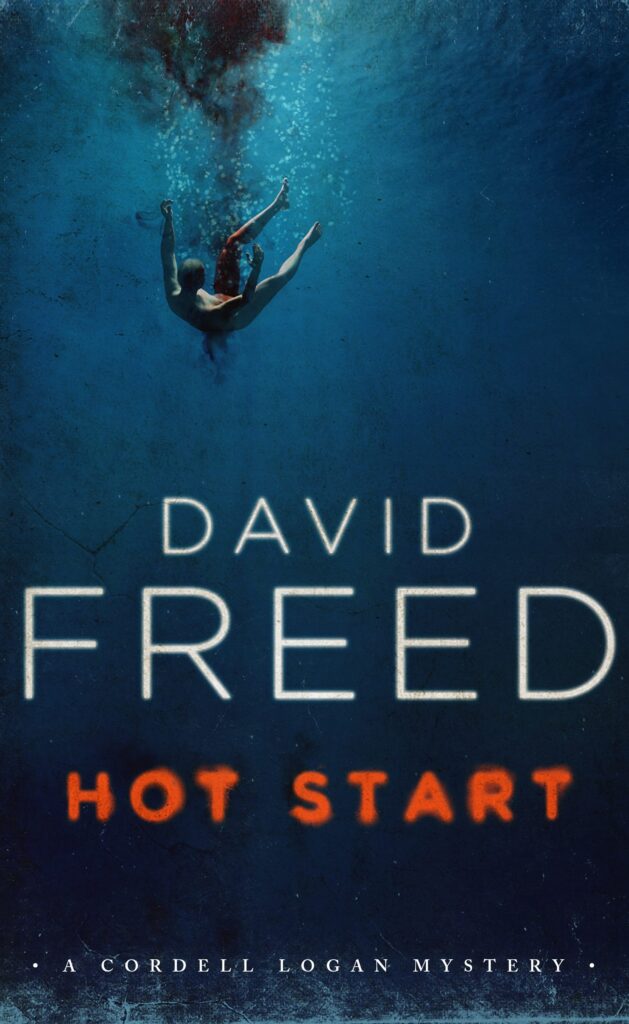
Lounging naked one sweltering night in the swimming pool of their opulent estate in seaside Rancho Bonita, an infamous big game hunter and his wife are gunned down at long range by an expert sniper. Local police quickly charge an outspoken animal rights activist with the murders, and with good reason. The evidence against him is overwhelming. But then rumors begin to surface that other suspects may have had their own reasons for wanting the couple dead. Pilot and former government operator Cordell Logan would rather not get involved in the case. He has better things to do, like trying to earn a living running his struggling flight school. However, he and the accused animal rights activist have mutual friends who persuade him to do some preliminary digging. What Logan soon discovers will lead him down a rabbit hole of deceit as vexing and potentially lethal as any he’s ever known. Pursuing the truth will expose him to a corrupt Congressman with ties to the White House, a European prostitution ring, and a ruthless Czech crime lord who will not hesitate to kill in protecting his business interests. Facebook Instagram Tumblr Hot Start Studio Review Order Now Praise For Hot Start “David Freed is unusually well equipped to tell tales like the one in his new crime novel, Hot Start. He won a Pulitzer Prize covering the police for The Los Angeles Times, covered war in Kuwait and Iraq, worked for a government security agency…and is an experienced pilot. Like his protagonist, Cordell Logan, he owns his own airplane. The result is another well-written yarn with both a streak of quirky humor and a sense of authenticity.” –Associated Press “Fast paced with generous dollops of humor and populated with vividly crafted and colorful characters.” -Library Journal (starred review) “Freed’s fifth mystery has a great pace, abundant humor, and a lively cast of supporting characters.” –Kirkus Reviews “Packed with rim-shot snappy dialogue and sharply barbed observations, David Freed’s Hot Start is a tasty romp. When it’s time to choose the right moments for Buddha and the right moments for something stronger, Cordell Logan is the right guy for the job. You’ll find him in the fray, cool as a cucumber and ready to fire off the next one-liner.” –The New York Journal of Books “A double murder propels Logan’s well-paced, action-filled fifth mystery featuring flight instructor and former government assassin Cordell Logan….as he deals smoothly with thugs, prostitutes, politicians, and other lowlifes enroute to a satisfying conclusion.” –Publishers Weekly Order Now
Fangs Out
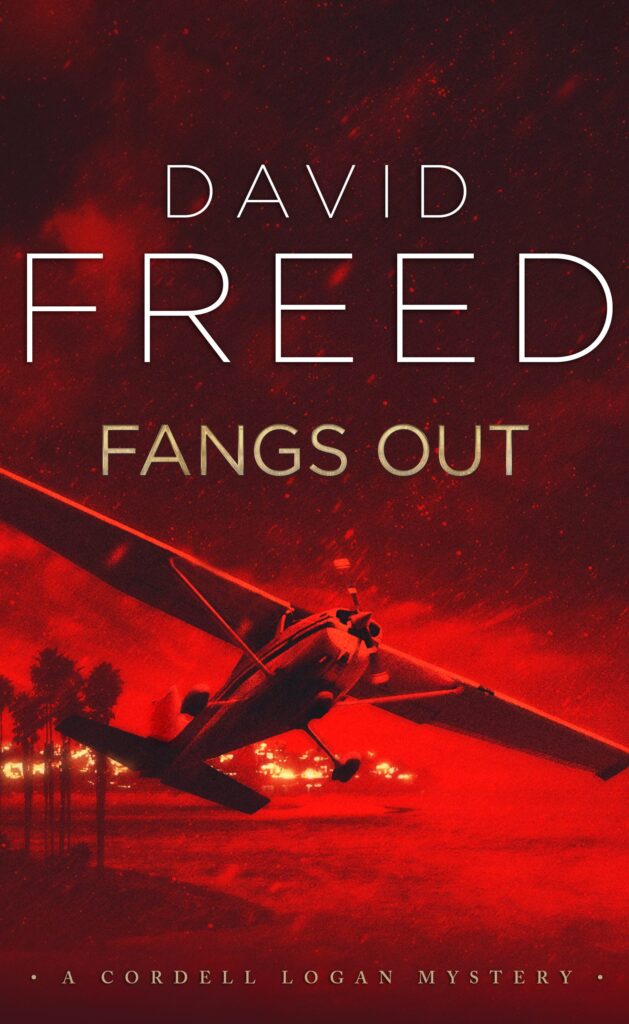
With his execution moments away, the condemned killer of famous Vietnam War pilot-hero Hub Walker’s daughter makes a stunning assertion: the real murderer is a prominent U.S. defense contractor and close friend of Walker’s. Incensed by what he regards as a groundless allegation, Walker wants to hire someone to dig up information that will debunk the convicted killer’s claims and restore his friend’s reputation. That someone turns out to be none other than Cordell Logan. Walker is a Medal of Honor recipient married to a former Playboy Playmate of the Year. They live in a mansion overlooking the Pacific in the exclusive San Diego enclave of La Jolla. Logan figures the job will be little more than a paid vacation and an opportunity to help restore his relationship with his beautiful ex-wife, Savannah. But soon after flying her to San Diego in his beloved, aging Cessna 172, the Ruptured Duck, Logan is sucked into a twisting vortex of lies as perplexing as it is potentially deadly. The deeper he digs, the further away the truth appears to be, and the more in peril he finds himself. Who really killed Hub Walker’s daughter and why? Somebody wants to prevent Logan from finding out, and they will stop at nothing to silence him. Facebook Instagram Tumblr Fangs Out Studio Review Order Now Praise For Fangs Out “Told in first-person, Fangs Out is the second book in the widely acclaimed Cordell Logan series, and like its predecessor is filled with bullet-speed wit, original characters (and a cat to die for), plus a fast-paced and intelligent plot line, climaxing with more than one surprise…David Freed is a master of mordant one-liners for which Raymond Chandler’s leading man, Philip Marlowe, would have given his eye teeth. Highly recommended for crime and thriller fans alike.” –The New York Journal of Books “Freed’s skills as a reporter, screenwriter, and pilot made Flat Spin a delight, and Fangs Out continues that roller-coaster pleasure. Logan is a stubborn, wise-cracking, ordinary guy with some extraordinary skills and a passion for flying.” –Library Journal “Freed, an experienced pilot, a Pulitzer Prize-winning journalist and a military affairs expert with an active security clearance, spins his suspenseful plot with the same muscular prose, hard-boiled attitude and flashes of wry humor that made the first Cordell Logan novel a critical success.” –Bruce DeSilva, Associated Press “An intriguing mystery. When Logan is in the air, Freed’s series really takes off.” –Booklist “Filled with humor and pop culture references, Fangs Out is a quick read that will leave even the most jaded reader eager for Cordell’s next adventure. Oh, and about that title. You are just going to have to read the book to find out what the term means.” –Bolo Books “Fangs Out is a fast-paced, lean plot which positively crackles with wit and invention.” –Thinking About Books “In Freed’s crackling second mystery…the appeal Logan, a wise-cracking, marriage-challenged loner trying to practice Buddhist tenets, once again proves his mettle as both pilot and investigator.” –Publishers Weekly “Freed entertains with the wisecracking Logan and a catalogue of offbeat characters. But is is not all humor. Freed, whose own flying experience is front and center and woven seamlessly into the story, has crafted a fine mystery that will keep you guessing until the very end.” –Mystery Scene Magazine “Exceptionally well-plotted with plenty of nicely positioned twists and turns and cleverly conceived paths of misdirection.” –Mysterious Reviews “All I can say is, “wow”….This one is outstanding. Action-adventure, mystery, death, and destruction, what more could a discerning reader want! The author has put together a great story.” –Paul Johnson, ReadersFavorite.com Order Now