
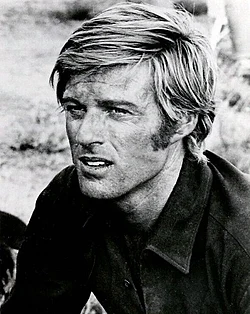
I once met Robert Redford.
I was a young reporter in Denver, covering the state legislature and governor’s office for the now-defunct Rocky Mountain News. I’d received a tip that Redford was scheduled to have breakfast the following morning at the Governor’s Mansion with then-Governor Dick Lamm.
I showed up early and met Redford at the door. After introducing myself, I asked why the two men were meeting. He brushed me off politely and suggested we could talk later at a public function where he was scheduled to speak.
When I approached him there, he brushed me off again—equally politely—with that effortless mix of charm and distance that defined his screen presence.
I never did learn the purpose of that breakfast.
But I remember him vividly.
He was shorter than I expected, and even more handsome. He wore a wool sportscoat, cowboy boots, a western shirt, and aviator glasses with a tiny chip in one lens—a small imperfection that somehow made him more human.
Robert Redford’s Films Helped Shape My Early Ambitions
What stayed with me even more than that encounter was how much my life seemed to intersect, in unexpected ways, with the characters Redford portrayed.
As a teenager, I took up winter mountain camping, inspired largely by Redford’s performance in Jeremiah Johnson. That romantic illusion ended abruptly after I fell through the ice of a mountain stream near Guanella Pass during a blizzard.
Cold, wet, and snowbound for days, I realized quickly that I was not Jeremiah Johnson.
And never would be.
How All the President’s Men Inspired Me to Become a Journalist
If Jeremiah Johnson taught me humility, All the President’s Men gave me direction.
Watching Redford portray Washington Post reporter Bob Woodward was transformative. He made journalism look meaningful. Purposeful. Essential.
It wasn’t just a job. It was a calling.
Seeing Woodward pursue truth with relentless focus inspired me to pursue journalism myself—a decision that would define the early trajectory of my career.
Robert Redford, the CIA, and My Unexpected Intelligence Community Connection
While still in college, I watched Three Days of the Condor, in which Redford plays an intelligence analyst caught inside a lethal conspiracy.
Not long after graduating, the CIA recruited me for a series of interviews in Washington.
The job they envisioned wasn’t one I wanted, and it never materialized. But years later, after leaving daily journalism, I found myself working under contract for both the CIA and the Defense Intelligence Agency.
My work bore little resemblance to Hollywood thrillers.
Still, carrying a top-secret clearance and operating within the intelligence community felt, at times, like stepping briefly into a Redford film.
How Robert Redford’s Aviation Film Influenced My Own Flying
In The Great Waldo Pepper, Redford plays a reckless, barnstorming pilot.
I, too, eventually became a pilot—though a far more cautious one.
Unlike Waldo Pepper, I preferred airplanes that landed reliably and avoided unnecessary drama.
Still, aviation became an enduring part of my life, and later, the defining element of my Cordell Logan mystery series.
My Brush With Hollywood and Redford’s Film Production Company
There were other intersections.
At one point, I was invited to audition for a small role in The Electric Horseman, starring Redford and Jane Fonda. The audition required showing up at a modeling agency wearing a flannel shirt.
When I arrived, I saw a group of impossibly handsome men who looked like professional actors.
I realized immediately that I did not belong among them.
I left without auditioning.
Years later, as a screenwriter, I pitched several projects to executives at Wildwood Productions, Redford’s development company.
None went anywhere.
More disappointing still, I never saw Redford again. I always wanted to ask him about that breakfast with Governor Lamm.
Robert Redford’s Legacy Beyond Acting: Sundance, Activism, and Independent Film
When news came that Robert Redford had passed away at 89, it felt strangely unreal.
He had always seemed timeless.
He was more than a movie star. He was a cultural force.
Redford used his success to elevate independent voices, founding the Sundance Institute to nurture emerging filmmakers and storytellers. He advocated for environmental preservation and civil discourse, demonstrating that influence could be used responsibly.
His legacy extended far beyond cinema.
He helped shape the stories that shape us.
How Robert Redford’s Films Influenced My Life and Writing
Looking back, Redford’s work provided more than entertainment.
His characters embodied curiosity, courage, and independence. They reflected a world larger than fear or routine—a world open to exploration.
For a poor kid from Colorado, his films suggested that life could be an adventure worth pursuing.
In ways both obvious and subtle, his stories helped shape mine.
That is how I’ll remember him—not just as an actor, director, or producer, but as a storyteller whose work inspired countless others to find their own voice.
Myself included.