
Readers often assume that because Cordell Logan flies a creaky, seen-better-decades Cessna 172—the Ruptured Duck—I must fly something equally geriatric, dented, and emotionally complicated.
This could not be further from the truth.
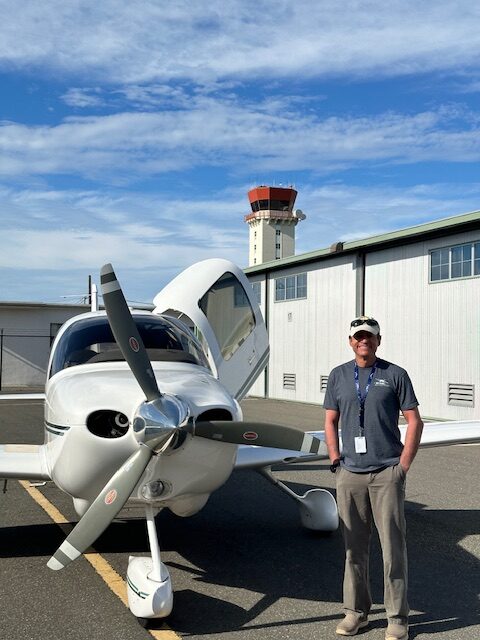
In reality, I fly a first-generation Cirrus, a sleek, exceedingly comfortable aircraft with glass avionics, a side yoke, and a temperament suggesting it was designed by psychologists intent on making flying feel therapeutic.
Logan’s airplane may not resemble mine, but it closely resembles the airplanes I flew for many years before upgrading.
The Real Aviation Experience Behind Cordell Logan’s Cessna 172
Before transitioning to the Cirrus, I logged several hundred hours in a Cessna 172—the very aircraft upon which the Ruptured Duck is modeled. The kind with sun-cracked plastic, earthtone interiors fashionable during the Nixon administration, and avionics that proudly declared themselves state-of-the-art sometime around 1973.
For more than a decade afterward, I flew a Piper Cherokee 180 built in 1965. It was simple, sturdy, and unfailingly loyal. I bought it believing it could carry my wife, two kids, and full fuel.
In practice, life intervened. The kids grew busy. My wife had better things to do than indulge my aviation obsession. These days, I fly solo far more often than I carry passengers.
But those hours gave me intimate familiarity with airplanes like the Duck.
How Real General Aviation Aircraft Inspired the Ruptured Duck
Duck-like airplanes aren’t fictional inventions. They’re affectionate composites of real machines I’ve flown and trusted.
I know the feel of their control yokes at rotation. I know the smell of heated oil and aging vinyl. I know the mysterious rattle behind the instrument panel that every mechanic acknowledges and none ever entirely resolves.
I know what it feels like to coax them to life on frigid Colorado mornings. I know the particular anxiety of departing short runways on scorching afternoons, calculating density altitude and silently negotiating with physics.
The Ruptured Duck is not imaginary. It’s built from memory.
Why Cordell Logan flies Airplane Reflects His Character
Cordell Logan isn’t me, and fiction isn’t autobiography.
Logan is a man shaped by hardship, experience, and scars he doesn’t advertise. He belongs in an airplane that reflects those qualities.
A Cirrus wouldn’t suit him—not because he couldn’t fly it, but because both pilot and airplane would feel out of place. Logan needs an aircraft that challenges him, frustrates him, and occasionally refuses cooperation.
The Duck is stubborn. Loyal. Loud. Temperamental.
It mirrors him perfectly.
In fiction, airplanes aren’t merely transportation. They’re characters.
Why I Fly a Cirrus Instead of a Cessna 172 or Piper Cherokee
My Cirrus suits me precisely because it simplifies life rather than complicating it.
For one thing, it moves. Anyone who has flown older general aviation aircraft understands that “cross-country flight” often requires patience and snacks. The Cirrus, by contrast, allows you to reach destinations before nightfall without elaborate planning.
The avionics represent an even greater leap forward. After years of flying behind steam gauges and aging radios, stepping into a glass cockpit felt like entering a different era.
The Cirrus provides information, clarity, and confidence.
It also provides something older aircraft lack entirely: a parachute. Every Cirrus aircraft comes equipped with a whole-airplane ballistic parachute. Pull the red handle, and the entire aircraft descends safely to earth.
Logan, of course, has no such luxury.
And that’s exactly why he shouldn’t.
Cirrus vs Cessna 172: How Aircraft Choice Shapes Aviation Fiction
The biggest difference between Logan’s airplane and mine isn’t technological. It’s narrative.
The Ruptured Duck complicates Logan’s life. The Cirrus simplifies mine.
The Duck forces Logan to remain vigilant, adaptable, and humble. It introduces uncertainty. It raises stakes. It creates tension.
The Cirrus allows me to focus on the journey rather than survival.
That distinction matters in fiction.
Stories thrive on uncertainty. Reliability, while comforting in real life, makes for dull storytelling.
Why Airplanes in Fiction Become Characters, Not Just Machines
After hundreds of hours flying Cessnas and a decade in a faithful Cherokee, I can say with confidence that airplanes develop personalities.
They have quirks. Moods. Habits.
The Ruptured Duck is not comic relief. He is Logan’s partner.
He challenges Logan. Protects him. Tests him.
And occasionally, saves his life.
Just as every pilot remembers the airplanes that shaped them, every writer remembers the machines that gave their characters wings.